Scottish Golf Venues Worth Planning a Trip Around
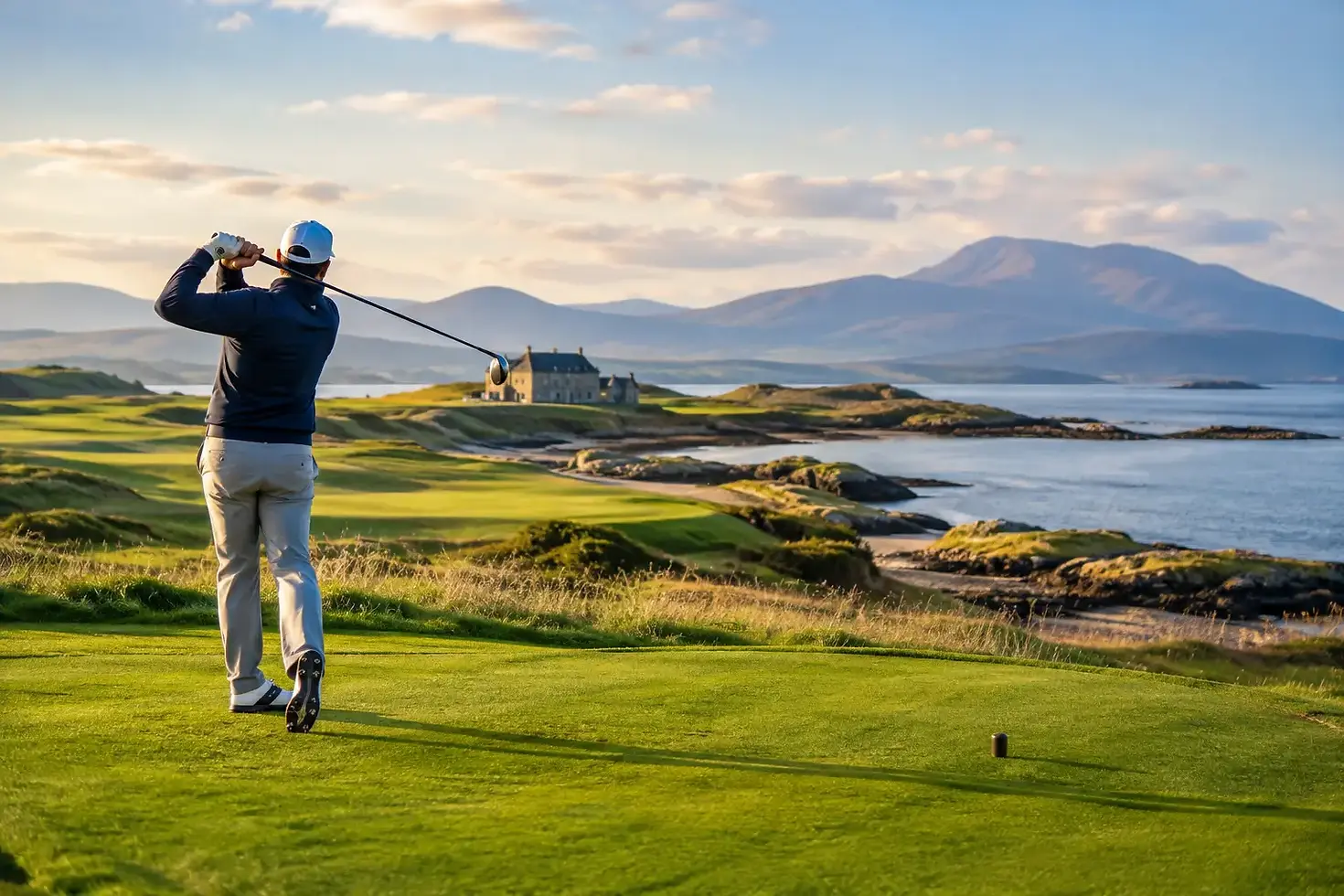
A round at the right Scottish golf venue can shape an entire holiday. The first tee at St Andrews, a windy afternoon at North Berwick or a quiet morning overlooking the Moray Firth at Royal Dornoch are not simply rounds of golf. They are reasons to see Scotland properly, with time for a good hotel, a memorable dinner and a route that does not leave you watching the clock.
For visitors arriving through Edinburgh or Glasgow, the key is not trying to play every famous course in a few days. Scotland rewards a well-planned golf itinerary. Distances can look modest on a map, but country roads, tee-time requirements, weather and the simple pleasure of stopping for lunch all matter. A private driver-guide allows the golf to remain the focus while the travelling is handled with care.
Scottish Golf Venues by Region
Scotland has exceptional courses in every direction, but grouping them by region makes a golfing break more enjoyable and realistic. The best choice depends on the style of golf you want, the season, your preferred accommodation and whether non-golfing guests are travelling with you.
St Andrews and the Kingdom of Fife
For many golfers, St Andrews is the starting point. The Old Course carries a sense of occasion unlike anywhere else, but the town offers far more than one celebrated tee sheet. The New Course, Jubilee Course, Castle Course and Eden Course can create a superb multi-day stay, while Kingsbarns and Dumbarnie Links add dramatic modern links golf within easy reach.
St Andrews works especially well for couples and groups who want golf alongside restaurants, coastal walks and historic streets. It is also one of the easier areas to organise from Edinburgh, although staying locally means less time in the vehicle and a more relaxed pace. Old Course access requires planning and there are several routes to play, so flexibility with dates is valuable.
East Lothian and Edinburgh’s Golf Coast
East Lothian is a strong choice for visitors who would like to base themselves in Edinburgh. Within a comparatively compact stretch of coastline sit North Berwick, Muirfield, Gullane, The Renaissance Club, Craigielaw and Dunbar. The views across the Firth of Forth are outstanding, but this is serious golf too - firm turf, coastal wind and strategic bunkering demand thought from every standard of player.
North Berwick is wonderfully distinctive, with holes that stay in the memory long after the scorecard has been put away. Muirfield is one of the world’s great championship venues, though its visitor arrangements and dress expectations should be understood in advance. Gullane provides a more flexible option and offers several courses, making it particularly useful when players have different handicaps or priorities.
Edinburgh’s restaurants, galleries and hotels make East Lothian one of the best answers for mixed-interest private travel. A golfer can enjoy a first-class links round while a partner spends the day in the capital, before meeting again for dinner without a long transfer.
Ayrshire, Arran and the West Coast
The Ayrshire coast has an impressive concentration of championship pedigree. Royal Troon, Prestwick and Western Gailes are close enough to combine over two or three days, while Turnberry brings a resort setting and striking views towards Ailsa Craig. Prestwick, host of the first Open Championship in 1860, is full of character and asks for accurate placement rather than sheer power.
This region is straightforward from Glasgow and works well as part of a wider west-coast journey. Golfers seeking a quieter, more remote extension can continue towards Machrihanish or travel to Arran, where golf, whisky, sea views and island hospitality make an excellent contrast to a city stay.
The Highlands, Moray and the North
Royal Dornoch has long been a destination for golfers prepared to travel north for something special. Its natural links terrain and setting beside the Dornoch Firth feel properly Highland, while nearby Golspie and Brora offer excellent variety. Further east, Nairn, Nairn Dunbar and Cabot Highlands near Inverness make a rewarding Highland circuit.
The trade-off is journey time. From Edinburgh or Glasgow, the Highlands deserve at least three days if golf is to feel like a holiday rather than a sequence of transfers. A longer stay opens the door to Loch Ness, Speyside distilleries, Highland castles and the coastal scenery around the Moray Firth. This is where a tailored itinerary earns its keep: an early tee time may be perfect for one group, while another may prefer a late morning round followed by a distillery visit or a scenic drive.
What Makes a Great Scottish Golf Itinerary
The famous names matter, but a successful trip is built around practical detail. Tee times should set the rhythm, not the other way round. Most links courses are best enjoyed with enough daylight afterwards to change, settle in and have dinner without rushing to the next destination.
A two-day break is ideal for Edinburgh and East Lothian, St Andrews and Fife, or Glasgow and Ayrshire. Three days allows for a more comfortable combination, such as St Andrews with East Lothian, or Ayrshire followed by a night on Arran. For Royal Dornoch, Inverness and the far north, four days or more is preferable.
Course availability can influence the route. Major championship venues may release visitor times on set dates, operate ballot systems or apply handicap requirements. Less famous neighbouring courses are not second-best by default. Often they provide faster play, easier access and just as much authentic links character. A balanced itinerary might pair a headline course with a local favourite rather than pursuing prestige every day.
Weather is another consideration. Scottish golf is played in changing conditions, and that is part of its appeal. May, June and September usually offer long days and good playing conditions, while July and August bring lively towns and higher demand. Spring can be crisp and beautifully quiet; autumn delivers rich colours and fewer crowds, though daylight begins to shorten. Waterproofs, layers and a spare pair of shoes are wiser than relying on a perfect forecast.
More Than a Round of Golf
The strongest golf holidays leave room for Scotland beyond the clubhouse. In Fife, that may mean fresh seafood in a coastal village. In East Lothian, it may be an evening in Edinburgh or a visit to a whisky bar. In the Highlands, it might be a drive through Glen Coe, a stop at a distillery or a stay in a country house hotel.
For non-golfing guests, this planning is particularly important. Scotland offers gardens, galleries, castles, shopping, spa time, wildlife cruises and whisky experiences within reach of many golf regions. A private itinerary need not split the party for an entire day. A morning drop-off at the course can be followed by a sightseeing route and a shared lunch or dinner later on.
There is also value in having someone responsible for the details. Clubs, luggage, collection times, restaurant reservations and changing weather can create unnecessary friction when everyone is trying to enjoy the trip. Rodney Johnston Tours brings experience from more than 50 golf events, alongside professional driver-guide service, to make the journey between Scottish courses as assured as the time spent on them.
Choosing Venues for Your Standard of Play
Scotland’s great courses are not reserved only for low-handicap golfers, but honest course selection improves the experience. Championship links can be demanding when the wind rises, and some venues have handicap limits for visitor play. If your group includes newer golfers, choose a route with variety: perhaps a demanding championship day followed by a friendlier coastal course or an inland parkland round.
It is also worth considering walking versus buggies. Traditional links golf is made for walking, and many courses either limit buggy use or restrict it to medical need. A caddie can add real value at a historic course, particularly where blind shots, shared fairways and deep revetted bunkers are part of the design. They help with strategy, but they also bring the course to life through local knowledge.
The most memorable Scottish golf holiday is rarely the one with the longest list of famous names. It is the trip with the right courses, sensible travelling times and enough space to enjoy the places in between. Choose a region, allow an extra night where possible, and let each round be part of a proper Scottish experience.


Comments