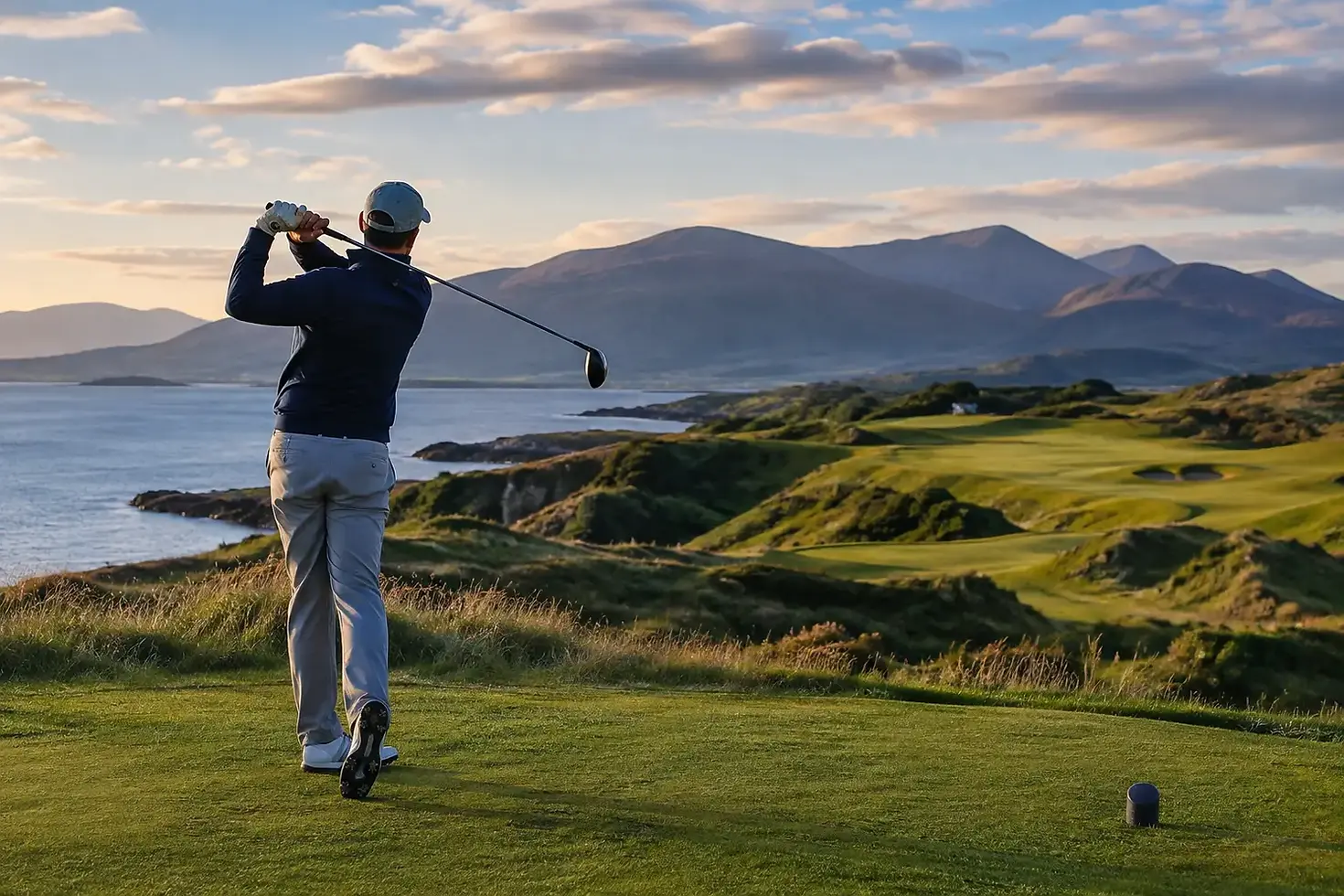
Highlands Golf Courses for a Private Scottish Tour
A round at Royal Dornoch can begin with the sea wind at your back and end with a view you will remember long after the scorecard is tucked away. That is the appeal of Highlands golf courses: they are not simply places to play, but reasons to travel through some of Scotland’s finest roads, coastlines and glens. For visitors arriving in Edinburgh or Glasgow, the key is allowing enough time to reach them properly and building an itinerary around the golf rather than trying to squeeze too much into one day.
The Highlands reward a measured pace. Distances can look modest on a map, but single-track roads, passing places, changing weather and the temptation to stop for a photograph all shape the day. A private golf journey lets you enjoy that rhythm while leaving the driving, timings and local logistics in experienced hands.
Why Highlands golf courses are worth the journey
The Highlands offer remarkable variety. On the east and north coasts, classic links courses sit beside wide beaches, firths and open skies. Inland, heathland and parkland layouts run through pine woods and around lochs, with the Cairngorms providing a dramatic backdrop. You can play a celebrated championship venue one day and a friendly, characterful local club the next.
This is golf with a strong sense of place. The wind is a genuine part of links golf, not an inconvenience to be ignored. Firm turf asks for imagination around the greens. At inland courses, changing elevation and mountain weather make club selection more interesting than the yardage alone suggests. Visitors accustomed to highly manicured resort golf often find this refreshing, although it does mean arriving ready to adapt.
There is also a practical advantage to a Highlands itinerary. Away from the busiest central belt routes, it is possible to combine serious golf with distilleries, castles, coastal villages and excellent Highland accommodation without spending every hour in traffic. The trade-off is that course availability, particularly at the most famous names, needs to be planned well ahead.
The standout Highlands golf courses
Royal Dornoch
Royal Dornoch is the course many golfers have on their Scottish wish list, and understandably so. The Championship Course is a traditional links of extraordinary natural beauty, with raised greens, rumpled fairways and holes that require thoughtful positioning rather than a simple display of power. Its setting on the Dornoch Firth makes even a difficult day feel memorable.
Dornoch is best treated as the centrepiece of a two- or three-day northern itinerary, rather than a quick detour. From Inverness, the journey is manageable, but an overnight stay in or near Dornoch gives you a far more relaxed experience. It also creates time for nearby courses such as Brora and Golspie.
Brora Golf Club
Brora is one of the great pleasures of northern Scotland. It is a proper links course with a timeless feel, coastal views and a layout that rewards confident, controlled golf. Sheep and cattle may be part of the landscape, which tells you something about how naturally the course sits within its surroundings.
Its appeal lies in character rather than spectacle alone. Brora works particularly well alongside Royal Dornoch because the two courses offer distinct tests while sharing that unmistakable Sutherland coastline. It is an excellent choice for golfers who value history, atmosphere and the chance to play without the formality of a major resort.
Castle Stuart Golf Links
Near Inverness, Castle Stuart brings a more contemporary championship experience to the Highlands. The course looks across the Moray Firth and has hosted top-level professional golf, with generous fairways in places but greens and angles that demand intelligent approach play. The views are striking, yet this is not a course to be distracted on.
Castle Stuart is a sensible first or final round for guests using Inverness as their base. It pairs well with a city stay, a visit to nearby distilleries or a scenic drive around the Black Isle. For travellers flying into Inverness, it can be the easiest high-quality introduction to Highland golf.
Nairn Golf Club and Nairn Dunbar
Nairn Golf Club is an established championship links with a fine coastal setting and a reputation for polished conditions. It is demanding without being theatrical, and its traditional character appeals to golfers who want a classic Scottish round close to Inverness. Nearby Nairn Dunbar offers a different but equally enjoyable links experience, making the area useful for mixed groups or consecutive rounds.
For a shorter Highlands break, Nairn, Castle Stuart and Fortrose & Rosemarkie can form a very satisfying three-course route. It keeps driving sensible while giving you coastal golf, local food and the chance to see dolphins from the Moray Firth shore if the timing is kind.
Fortrose & Rosemarkie
Fortrose & Rosemarkie is often described as a hidden gem, though keen golfers have known about it for years. Set on the Chanonry Peninsula, it is one of the oldest courses in the world and has an intimate, welcoming feel that contrasts with the scale of major championship venues.
It is not the longest course, but length is not the point. Sea breezes, tight lies and well-placed hazards make it engaging, while the setting creates one of the most enjoyable late-afternoon rounds in the region. This is a fine option for golfers who would rather play a course with soul than simply chase another famous name.
Boat of Garten, Kingussie and Spey Valley
The Cairngorms provide the inland counterpoint to the Highlands’ coastal links. Boat of Garten is a charming heathland course among pines and heather, with the Strathspey Railway nearby and a relaxed Highland atmosphere. Kingussie offers a scenic, engaging round in the heart of the national park, while Spey Valley near Aviemore brings a longer, modern layout with generous mountain scenery.
These courses suit guests travelling between Edinburgh and Inverness, or those wishing to combine golf with whisky and the wider Speyside area. They are also useful when coastal wind is particularly strong. Weather cannot be guaranteed anywhere in Scotland, but a well-planned itinerary can give you alternatives rather than forcing every round into one exposed stretch of shoreline.
Building the right Highland golf itinerary
A good itinerary starts with the standard of golf you want, then works backwards through travel time and accommodation. A golfer with Royal Dornoch at the top of the list should usually plan at least two nights north of Inverness. Someone keen to play Castle Stuart, Nairn and Fortrose can comfortably use Inverness or the Black Isle as a base.
For a longer trip, a natural route is Edinburgh to the Cairngorms, onward to Inverness, then north to Dornoch and Brora. This gives you a changing landscape as well as changing courses: city departure, mountain roads, Moray Firth coastline and the open northern shore. It also avoids the fatigue of repeated long transfers.
Tee times should shape the day. An early start can be worthwhile if it protects an afternoon drive, but there is little pleasure in rushing through breakfast, arriving tense and walking straight onto the first tee. Allow time for lunch, a warm-up, photographs and the occasional unscheduled stop. In the Highlands, the journey is part of the holiday.
For groups of one to four, Rodney Johnston Tours can arrange private driver-guide travel around the course bookings and accommodation plan. That means clubs, luggage, dinner arrangements and changing weather can be managed without every golfer needing to calculate the next route after 18 holes.
What to know before you play
The best-known Highlands golf courses have limited visitor tee times during peak season, generally from late spring into early autumn. Reserve the priority course first, then build the rest of the itinerary around it. Shoulder-season golf can offer quieter fairways and beautiful light, but daylight is shorter and conditions are more variable.
Bring proper waterproofs, layers and a hat, even when the forecast looks promising. Highland weather can change quickly, especially on exposed links. Windproof clothing matters more than carrying a heavy wardrobe, and waterproof golf shoes are a sensible choice throughout the year.
Handicap requirements vary by club, as do rules on buggies, caddies and dress. Most visitors will find a warm welcome, but traditional courses rightly expect good pace of play and care for the course. If a round is important to you, confirm these details before travel rather than assuming every club operates in the same way.
Non-golfing companions need not be left with a day to fill alone. Around Inverness and the Moray Firth there are distilleries, gardens, coastal walks and historic sites; around Dornoch, beaches and quiet villages make an easy, unhurried alternative. This is one reason private touring works especially well for couples and small family groups with different interests.
Choose fewer courses and give each one the time it deserves. The best Highlands golf break is not measured by the number of scorecards collected, but by a well-struck shot in the sea air, a relaxed drive through the glens and the feeling that Scotland was experienced rather than hurried through.


Comments